


Why Do Hospitals Have Backup Generators?
Hospitals have generators to ensure the continuity of essential patient care during a power outage. Regulatory bodies such as the National Fire Protection Association (NFPA) and The Joint Commission legally mandate every hospital to have a robust backup power system. A backup generator activates when a hospital’s main power source shuts down, taking over to power the following functions:
- Emergency lighting
- Operating room equipment
- Life support equipment
- Critical care units
- Security systems
- Electronics
- Heating, ventilation, and air conditioning (HVAC) systems
A backup generator is a crucial aspect of disaster preparedness and patient safety. A quality generator guarantees continuous functionality even in widespread blackouts.
Designed to Be Trusted
The equipment in your facility can save lives. Use a standby power generation system that delivers dependable backup power when it’s needed. Cat® generators ensure critical power to essential equipment in some of the world’s largest hospitals and health care facilities, supported by Cat uninterruptible power supply (UPS) systems, automatic transfer switches (ATS), and switchgear.
We’ve engineered our generators for hospitals and the health care industry to operate at peak efficiency and meet European Union (EU) and U.S. Environmental Protection Agency (EPA) emission standards.
It is essential for your hospital to have a backup generator you can trust when the power goes out. With our knowledge and experience, we will configure a power system to match the ongoing demands of your health care facility and provide additional temporary power in emergencies. Plus, our Thompson Power Systems experts are available for installation and ongoing maintenance — allowing you to care for patients with confidence.
Hospital Emergency Generators That Meet Critical Demands

Hospital emergency generators must power a large number of vital machinery. From life support equipment and intravenous dispensing systems to refrigerators that hold lifesaving medication, hospitals need a significant amount of power to keep moving in case of an emergency. Generators for health care industry applications must provide that power with consistent reliability. At Thompson Power Systems, we offer a wide range of generators that can help you meet your needs.
Our inventory of hospital emergency generators includes:
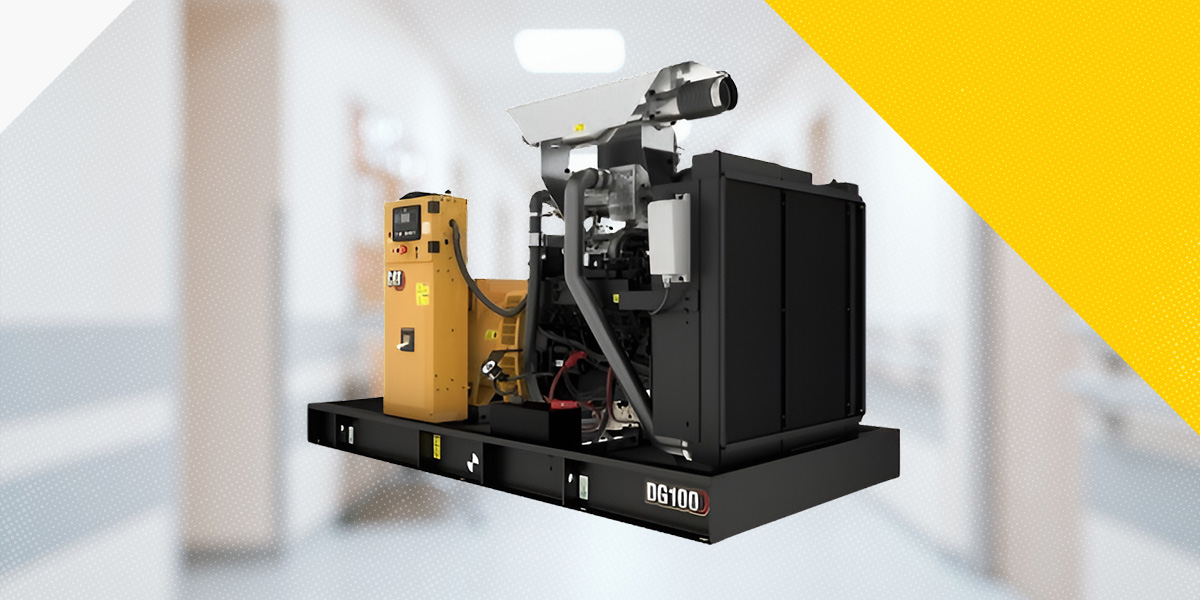
- Diesel generator sets. A hospital diesel generator is one of the most powerful options you can select for particularly large operations. These generators can reach up to 14,040 ekW to support vast numbers of equipment. They’re built to meet world-class standards and also offer high efficiency and low fuel consumption.
- Gas generators. Gas generators are also available, which can support up to 9,700 ekW per unit. They offer more versatility through accommodating different fuels, such as natural gas, biogas, propane, coal gas, and alternative fuels. When some fuel sources are more readily available or cheaper, you can use the best option for your facility.
- Microgrid. Microgrids and renewable energy systems allow you to harness sunlight for cost-effective and eco-friendly power systems. We have photovoltaic modules, controllers, storage inverters, and other equipment to create a robust power generation and storage system for health care facilities.
- Mobile generator sets. With mobile generators, you can move your power system where it’s needed most, whether that’s halfway across town at another building or just across the hospital campus. Support off-site work, too, such as mobile events.
To support these generators and divert power where it’s needed, we also offer control systems, such as switchgear and paralleling controls, ATS and ATC breaker/contactors, and ATS MX contactors.
At Thompson Power Systems, we offer new equipment sales as well as used equipment and rentals. Buying used is a great way to save some money on a purchase, especially when buying from a trusted, long-lasting manufacturer such as Caterpillar.
Reliable Power for Essential Life Support
Powering a hospital’s most critical equipment isn’t something you can trust to subpar solutions. Many health care facilities know the value of working with a dependable dealer that offers quality products. Without it, lives could be at risk.
Edward Hospital & Health Services is a full-service regional health care provider that offers a wide variety of medical specialties and programming from 28 locations in 10 communities. The main campus supports 4,700 employees, including 1,200 nurses and a medical staff of over 1,000 physicians.
Many people wonder if hospitals have backup generators to ensure uninterrupted power, and whether they have backup generators during emergencies and critical situations. The answer is yes — hospitals typically invest in reliable power solutions, but you might ask, how many backup generators does a hospital have to maintain operations during a power outage?
On average, a hospital may have multiple backup generators, depending on its size and specific needs, highlighting the importance of understanding how many backup generators a hospital has for effective emergency preparedness. You can learn more about hospital generator requirements in our blog.
“We’ve seen many disasters strike hospitals throughout the U.S. It’s very important to have backup power and services available because when the power goes off for whatever reason, patients still need to receive their care,” said Patti Ludwig-Beymer, vice president and chief nursing officer at Edward Hospital. “Patients will die if we don’t have the backup power available to them.”
Trust the Experts at Thompson Power Systems for Hospital Emergency Generators
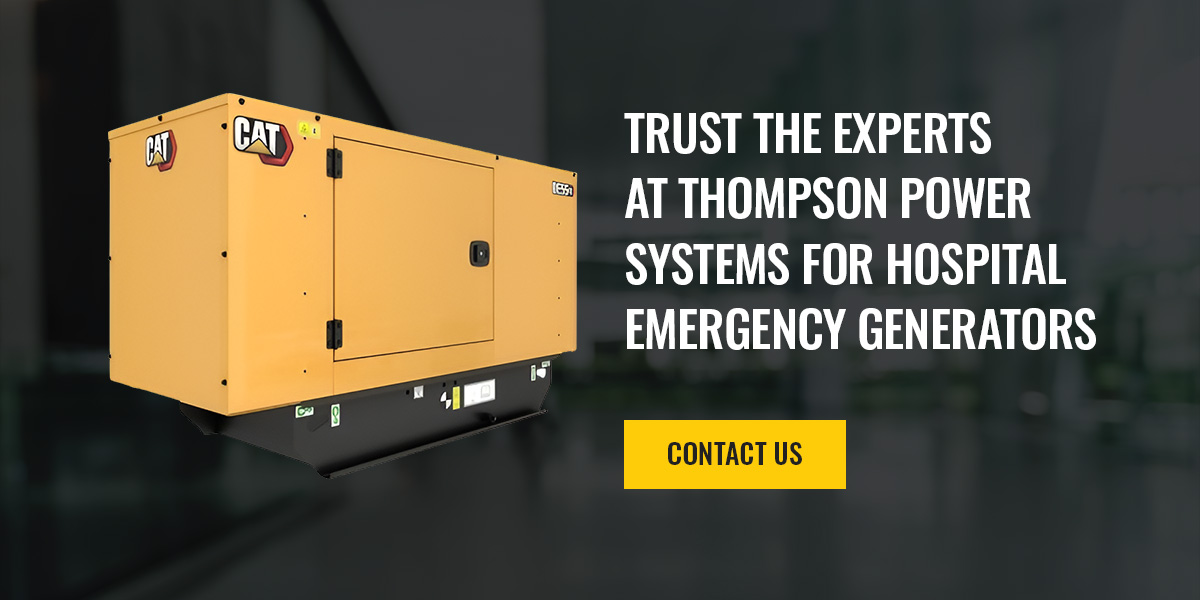
Thompson Power Systems has been a dependable expert for hospitals in Alabama and northern Florida to turn to for over 60 years. We offer a wide supply of hospital generators for sale, along with the level of support you need to ensure your generators are in top shape. That includes everything from service conducted by factory-trained technicians to flexible financing options on new and used equipment. We also have rental equipment and access to a wide selection of parts for engine maintenance and repairs.
This means that you get the resources of Caterpillar along with the local touch of trusted experts who know you and your business. We’re proud to be a one-stop shop for the power generation needs for our partners.
Frequently Asked Questions
We’ve answered some common questions about backup power solutions for hospitals and health care facilities.
What Do Hospitals Do if They Lose Power?
When a hospital experiences a power outage, it typically transitions to backup power instantaneously. Automatic transfer switches enable backup generators to activate within seconds of a primary power failure, maintaining critical systems. This ensures uninterrupted care for the most vulnerable patients.
In the event of a power failure, hospital staff immediately implement emergency protocols. As soon as backup generators activate, staff take the following actions to maintain safety:
- Manually monitor equipment
- Conserve power where possible
- Prepare for extended operations under isolated conditions
- Coordinate with utility providers for power restoration updates
How Many Generators Are in a Hospital?
The number of generators in a hospital depends on its size, specialization, and critical load demands. A larger hospital might employ multiple units, but smaller facilities may only need one or two units.
Many hospitals have one or two extra generators beyond their requirement. This ensures uninterrupted backup power in case the main backup unit fails, and it allows for planned maintenance without compromising emergency power capabilities.
What Types of Generators Do Hospitals Have?
Hospitals mainly rely on diesel-fueled generators due to their enhanced reliability, rapid startup, and durability in extended storage. Facilities in urban areas with resilient natural gas line access often rely on gas generators. For a highly sustainable option, health care facilities can install microgrids and renewable energy systems.
How Long Can a Hospital Run on Backup Power?
Regulatory bodies require hospitals to be able to run on backup power for a minimum of 96 hours before requiring a fuel resupply. This helps ensure continuity of care, keeping lifesaving equipment in operation. Each hospital should also store extra fuel on site and arrange contracts for emergency deliveries from fuel suppliers in case a prolonged grid failure occurs.
How Long Does a Hospital Generator Last?
A generator’s full lifespan depends on its total accumulated run hours, environmental conditions, and service intervals. A well-maintained hospital generator typically lasts 20 to 30 years, but high-quality generators can last longer with meticulous care and regular servicing. Weekly, monthly, and annual checks can help you address potential complications. It’s also important to schedule regular oil changes and comprehensive inspections to ensure reliable operation.
What Places Have Backup Generators?
All facilities that deliver critical services have backup generators. In addition to hospitals and health care clinics, the following industries and locations depend on backup power:
- Nursing homes
- Data centers
- Airports
- Government and military facilities
- Oil and gas
- Utility providers
Backup generators are also helpful in noncritical applications such as residential homes, office buildings, and manufacturing plants.