
Energy as a Service (EaaS)

Energy as a Service (EaaS)

The total costs of purchasing power equipment outright can be high. You also have the added burden of maintaining a generator or HVAC system. Energy as a service allows you to pay for power and uptime, rather than the assets themselves. Explore how EaaS works in more detail, including its benefits and how you can leverage it for the best results.

What Is Energy as a Service?

The EaaS business model involves businesses paying for energy services without up-front capital investment in the equipment. This includes equipment like generators, HVAC systems, and microgrids.

Traditionally, businesses would buy energy assets outright. This comes at a massive capital expense. There are additional costs, like maintenance, as well as the manpower needed for repairs and servicing. You also have to manage equipment issues like depreciation, obsolescence, and compliance.

With EaaS, you pay a provider to take care of everything from supplying and installing the power equipment to emergency repairs. You can shift from a capital expenditure model to an operational expenditure model. This can help free up cash flow, allowing you to reinvest where your business needs it most, while also freeing up labor and enabling you to focus on your project goals.

How the EaaS Business Model Works

The EaaS provider is responsible for the ownership, installation, and maintenance of the power equipment. In return, you pay a recurring fee based on energy usage or another outcome.

EaaS solutions can benefit short- and long-term contracts. You may need a generator for a few months while your jobsite is being connected to the grid, or you may prefer to rent an HVAC system on an ongoing basis.

Energy management as a service follows three key stages:

  1. Assessment: First, a technician carries out a load analysis to find how much power you need. They will also inspect the jobsite to see where the energy equipment will sit and consider issues like cabling and noise restrictions.
  2. Implementation: Providers set up the power equipment so you can turn the key. From dropping off the generator to testing the equipment, the EaaS company will ensure the equipment is fully working.
  3. Management: The provider handles any further maintenance or repair work. An efficient energy infrastructure as a service provider will use remote monitoring systems to schedule maintenance and detect faults before they cause downtime.

Key Benefits of Adopting an EaaS Strategy

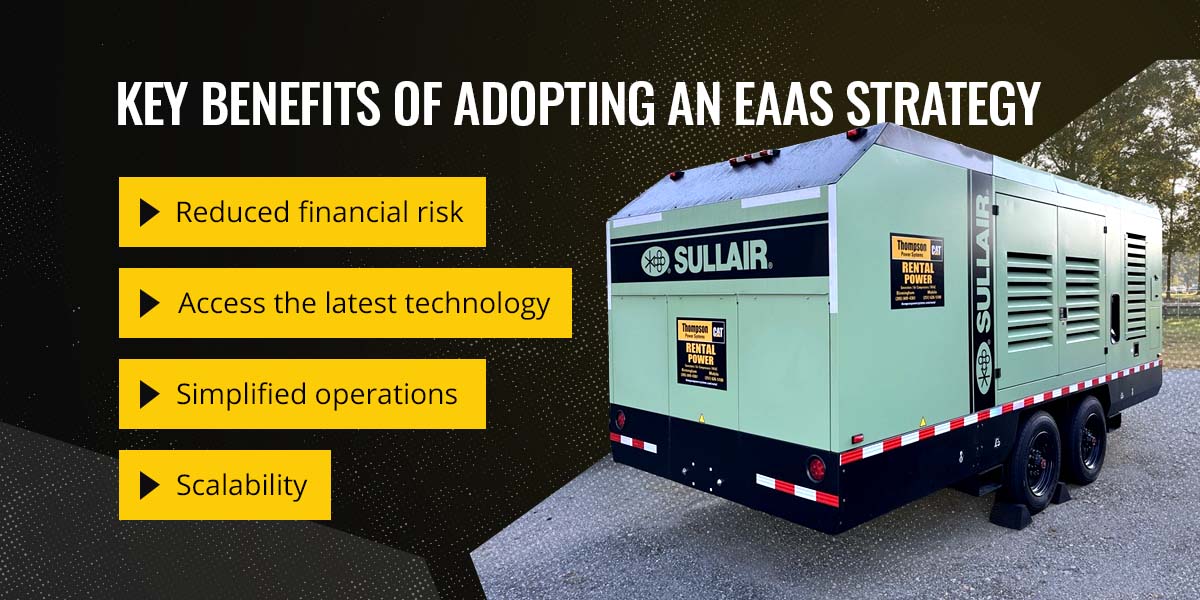
EaaS offers a range of capital and operational benefits, including:
Key Benefits of Adopting an EaaS Strategy

  • Reduced financial risk: By renting power equipment, you pay a fraction of the full purchase price. The provider will carry out any repairs, protecting you from unexpected bills or the need to redirect manpower. You also avoid the burden of managing depreciating assets.
  • Access the latest technology: EaaS providers utilize advanced technology, allowing you to achieve optimal results without a significant investment. You gain access to the most efficient equipment and features like smart microgrids. This also includes Tier 4 generators, which can help you meet emissions standards.
  • Simplified operations: Outsourcing energy management frees up your team to focus on core business tasks rather than fleet maintenance.
  • Scalability: You can scale up the number of power units or total power you need based on your project demands. This extra flexibility is ideal for businesses that are looking to scale.

Common Energy as a Service Examples

Here are some examples of energy as a service solutions:

  • On-site power generation: Through your EaaS provider, you can rent generators to power jobsites that aren’t connected to the grid. You can also rent them in an emergency should your usual power source fail. Alternatively, you can keep generators on-site in the event of intermittent power to minimize downtime.
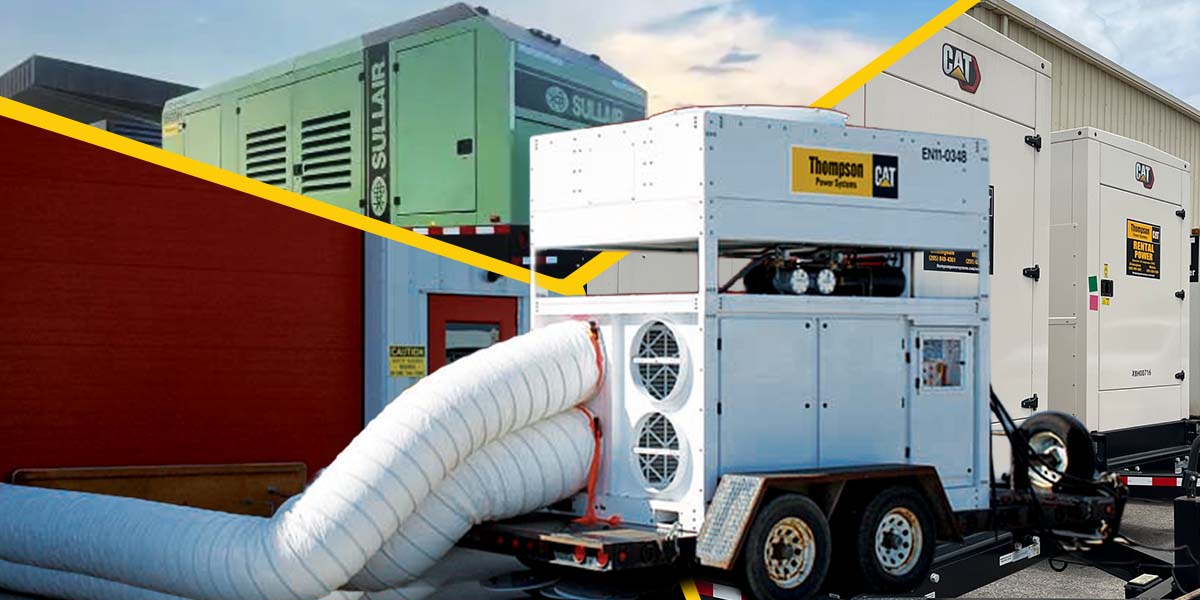
  • HVAC Solutions: For temperature-controlled jobs, renting an HVAC system ensures you can keep on working in the right conditions. This can be a great solution for special events or for longer-term contracts, eliminating the need to purchase permanent infrastructure.
  • Energy storage and management: You can rent a battery storage system to smooth out any spikes in load on-site. This can help you avoid demand charges on your utility bill, without having to invest in a bigger grid connection.
  • Fuel tanks: Some jobs, like pumping out a swamp, require power 24/7 over a number of days to complete the work efficiently. Renting auxiliary fuel tanks through an EaaS provider means you don’t have to pay someone to refill tanks overnight. Your EaaS provider can also help you choose the right capacity for the job.
  • Electrical distribution equipment: If you’re managing a project where you need to protect data centers or sensitive electrical equipment while cutting mains power, switchgear and automatic transfer switches can keep systems running efficiently by delivering steady power.
  • Portable compressed air: For time-sensitive projects that require additional capacity, portable compressed air equipment, like air compressors, can provide a continuous air supply. This enables the use of more tools simultaneously, leading to faster job completion. Renting air compressors can be more cost-effective than buying them if you only need that extra capacity for a short period.

Selecting the Right Energy as a Service Provider

Find reliable EaaS providers by doing your due diligence. Choose a partner that has a proven track record. Opt for EaaS companies with local technicians operating in your area and a parts inventory. In an emergency, the company with the fastest response time will be the one that has a technician nearby and the necessary parts.

Ask your provider if they have turnkey capabilities. An energy as a service provider can handle everything from the design and delivery of power equipment to fueling and maintenance. With one company handling the entire process, this gives you the peace of mind to get on with your projects.

Why EaaS Is the Future of Jobsite Power

The construction and industrial sectors are investing more in the rental and EaaS market. Equipment rental revenue is expected to grow by 2.3% in 2026, reaching nearly $82.3 billion.

One of the key drivers behind more companies investing in EaaS is uptime. When you rent power equipment using a reputable EaaS provider, you get a reliable source of power without requiring extra labor. You are paying that company to manage preventive maintenance and fault finding as you continue your projects, rather than having to pay high up-front costs and then factor in managing the equipment yourself.

An added bonus is that service providers often maintain newer, cleaner fleets. This can help you meet your sustainability goals, environmental regulations, and emissions targets.

Partner With Thompson Power Systems for Your Energy Needs

Partner With Thompson Power Systems for Your Energy Needs

EaaS can provide cost-effective and efficient solutions to your power needs. By using a reliable partner to rent, install, and manage your power equipment, you can access the latest technology to keep your projects moving.

Thompson Power Systems is the premier partner for power generation in Alabama and Northwest Florida. We offer various practical EaaS solutions like mobile generator sets with 20kW to 2000kW+ of power, heaters ranging from 18kW to 150kW, and switchgear ranging from 480V to 15kV.

Contact our knowledgeable team today to find the optimal power equipment for your project.

Previous ArticleHow to Stop a Generator From Overheating